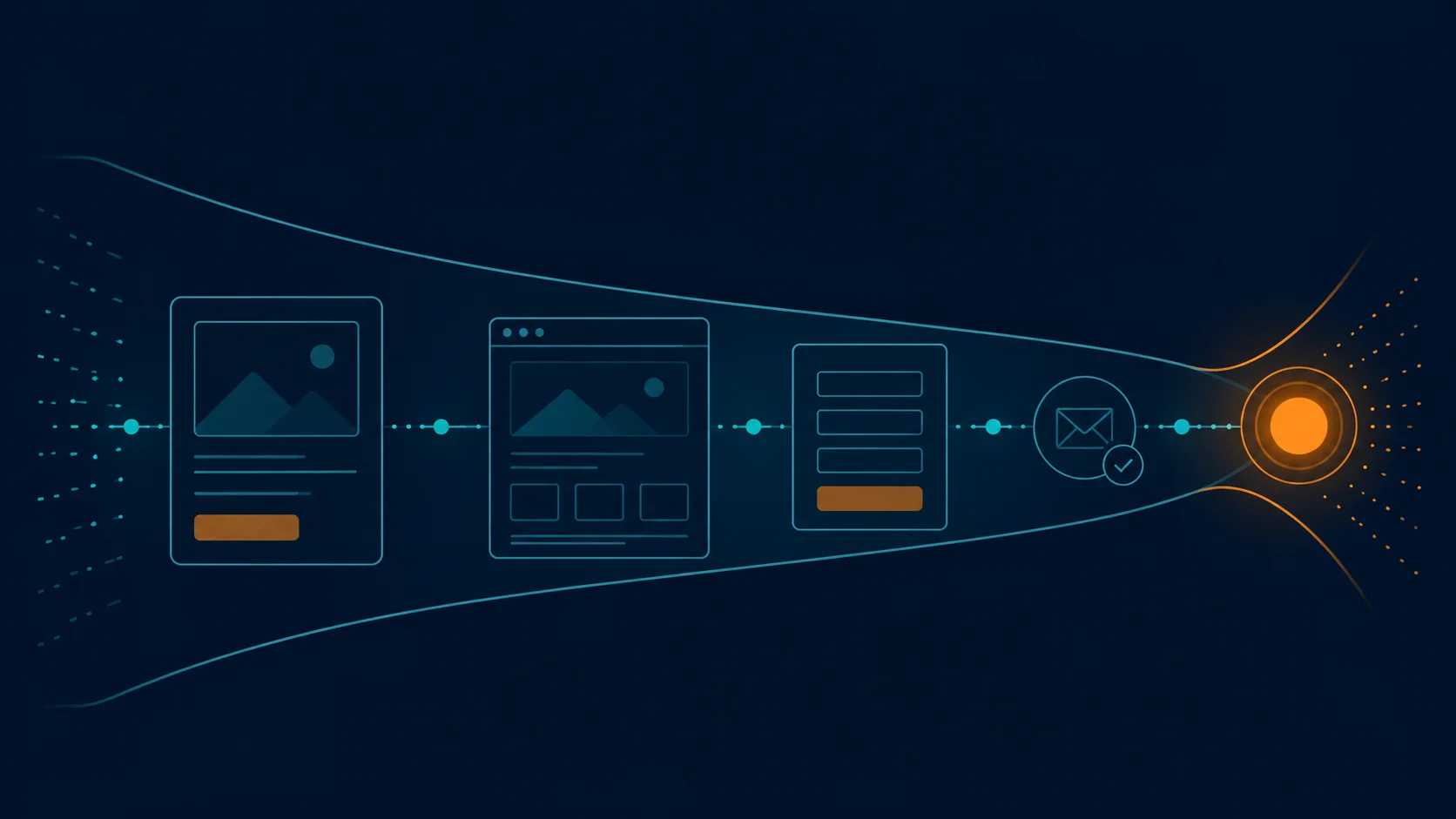
Better leads come from matching the advertisement, landing page, form, and follow-up. If those steps promise different things, the wrong people inquire and strong prospects lose confidence.
The problem
Many campaigns focus on clicks and form submissions. The business actually needs relevant inquiries, bookings, or sales conversations.
An advertisement may be specific while its landing page is generic. A form may collect too little useful information. A good inquiry may also reach the wrong person or wait too long for a reply.
What to change
Use the same audience, offer, and next step throughout the campaign. The landing page should explain who the offer is for, what it includes, and what happens next.
Ask only for information the team will use. Then send the inquiry to a clear owner with the campaign source and form details attached.
A simple checklist
- Name one audience and one business problem.
- Make the advertisement and landing page support the same promise.
- Show enough evidence to build trust.
- Ask useful questions without making the form unnecessarily long.
- Confirm the inquiry immediately.
- Assign one person to respond.
What to track
Track qualified inquiries, appointments, bookings, sales conversations, and response time. Clicks and cost per lead are useful context, but they do not show whether the business received a good opportunity.
Common mistakes
- Sending every advertisement to the homepage.
- Counting every form submission as a good lead.
- Asking questions that nobody uses.
- Failing to record which inquiries became real opportunities.
- Buying more traffic before fixing slow follow-up.
Need help?
iFORCE can connect the campaign, landing page, inquiry form, tracking, and response process around one business goal.